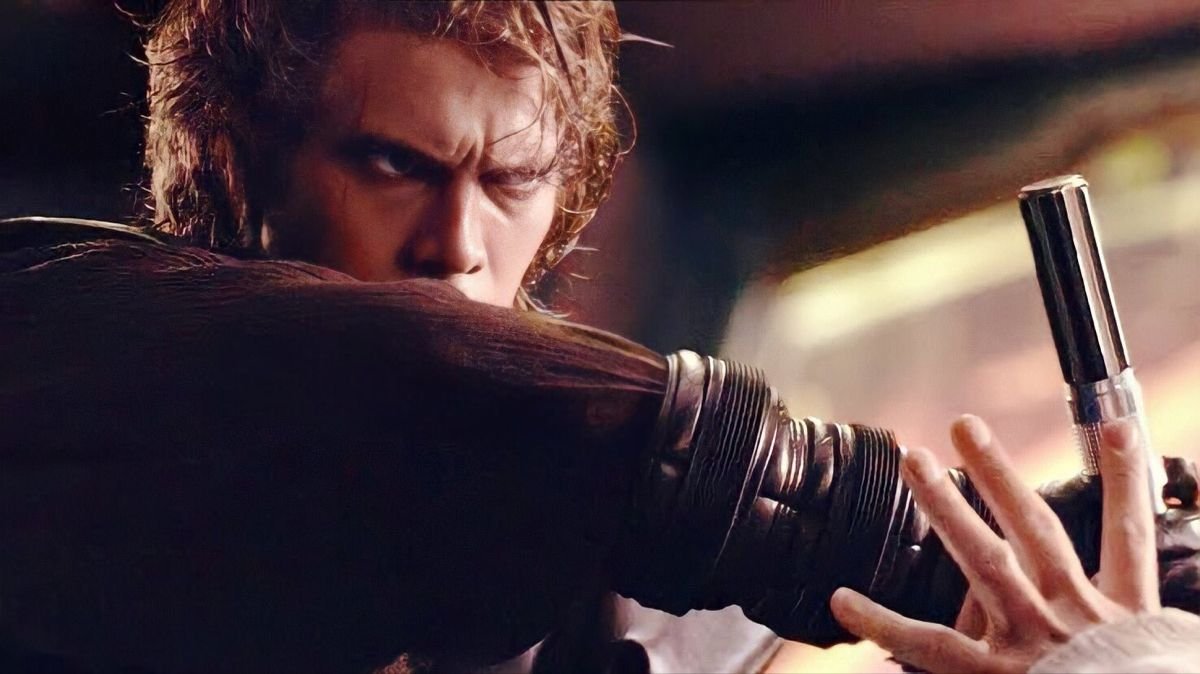
The galaxy, far, far away, has always been a mirror to our own human struggles. Few characters encapsulate this better than Anakin Skywalker, whose journey from promising Jedi to the tyrannical Darth Vader is a tragedy of epic proportions. And when it comes to understanding the true origins of his fall, the Pivotal Scenes and Symbolism of Anakin in Episode II offer an unvarnished look into the nascent darkness brewing within him.
Forget the hero-in-training; in Attack of the Clones, we witness the raw, unfiltered emotional turmoil that would eventually consume him. This isn't just about lightsaber duels and space battles; it's a deep dive into the human psyche, exposing the fatal flaws that paved the way for the galaxy's darkest era.
At a glance: Anakin's Descent in Episode II
- Emotional Instability: Anakin's volatile emotions—anger, fear, attachment—are frequently on display, clashing directly with Jedi tenets of detachment.
- Forbidden Love: His passionate, secret relationship with Padmé Amidala directly violates the Jedi Code, creating immense internal conflict and vulnerability.
- The First Taste of Vengeance: The brutal slaughter of the Tusken Raiders on Tatooine after his mother's death marks a profound and violent embrace of the dark side.
- Impulsivity and Disregard for Authority: Anakin frequently chafes under Obi-Wan's guidance, prioritizing his feelings and desires over discipline and protocol.
- Foreshadowing the Fall: Recurring visions and dreams highlight his connection to the Force, but also his inability to control it, often leading to tragic outcomes.
- A Galaxy in Flux: His personal turmoil mirrors the galactic conflict brewing, setting the stage for the Clone Wars and the eventual rise of the Empire.
The Weight of Expectation: Anakin's Early Struggles
Ten years after the events of The Phantom Menace, Anakin Skywalker is no longer a wide-eyed boy. He's a powerful, albeit often arrogant, Jedi Padawan, bristling under the tutelage of Obi-Wan Kenobi. The film wastes no time in showing us an Anakin deeply conflicted. His skills with the Force are undeniable, his passion burning bright, but so too are his pride, his impulsiveness, and his intense need for control and validation.
From the moment he's reunited with Padmé Amidala, tasked with protecting her from an assassination attempt, the seeds of his undoing are evident. His lingering affection, bordering on obsession, for the Senator is clear. It's a fundamental conflict with the Jedi Code, which strictly forbids attachments. He sees himself as being held back, his power misunderstood, his destiny unfulfilled. This simmering resentment is a critical first step on his dark path.
A Forbidden Love Blooms: Anakin and Padmé on Naboo
The Jedi Council's decision to send Anakin with Padmé to Naboo for protection, while Obi-Wan investigates the assassin, proves to be a catastrophic error. Isolated from the watchful eyes of the Jedi Temple, Anakin's suppressed emotions erupt.
The Confession of Love
On the picturesque lakes of Naboo, away from the rigid structure of Coruscant, Anakin confesses his love to Padmé. This isn't a tender, innocent affection; it's an intense, almost desperate declaration. He describes his feelings as a force of nature, beyond his control, and dismisses the Jedi Code as a restraint on his true self.
Symbolism: This scene is drenched in symbolism. The idyllic, peaceful setting of Naboo contrasts sharply with the turmoil in Anakin's heart. The beautiful, natural environment represents the temptation of a "normal" life, free from the asceticism of the Jedi. His declaration, filled with possessiveness ("I can't live without you"), directly contradicts the Jedi tenet of selflessness. It shows his attachment as a weakness, a gateway for manipulation. Padmé, initially hesitant and pragmatic, eventually succumbs to his intensity, drawn by a mixture of fear for his potential and perhaps her own suppressed desires. This forbidden bond becomes a cornerstone of his fall, a profound vulnerability that Darth Sidious will later exploit mercilessly.
The Phantom Menace Within: Tatooine and the Embrace of Vengeance
Anakin’s idyllic time on Naboo is shattered by recurring, disturbing visions of his mother, Shmi, in pain. Ignoring Obi-Wan's instructions to stay with Padmé, and fueled by a powerful sense of dread, he travels to Tatooine. This impulsive decision, driven by personal emotion rather than Jedi duty, showcases his increasing disregard for authority and his own code.
Shmi's Death and the Tusken Raider Massacre
On Tatooine, Anakin’s worst fears are realized. He finds his mother, kidnapped and tortured by Tusken Raiders, dying in his arms. Her last words, affirming her love and pride in him, break something fundamental inside Anakin. What follows is arguably the most pivotal scene in the entire film and a significant marker in his transformation.
Consumed by grief, rage, and a thirst for vengeance, Anakin brutally slaughters every single Tusken Raider in the camp—men, women, and children.
Symbolism:
- Chains: His mother's death, ironically, frees her from slavery but metaphorically binds Anakin in chains of hatred and guilt. The chains of attachment, once a source of love, now become a conduit for unimaginable pain and rage. He, who was once a slave, now enslaves himself to his darkest emotions.
- The Desert: Tatooine, a harsh and unforgiving world, mirrors the barrenness and cruelty that now begin to define Anakin's inner landscape. It's a place of origins, but also of irreversible corruption.
- The Confession to Padmé: Returning to Padmé, Anakin confesses his horrific act. He's wracked with guilt but also defiance, admitting he "slaughtered them like animals." This confession isn't just about the act itself; it's his first admission of embracing the dark side's power to assuage his pain. Padmé's horrified reaction, yet ultimate willingness to comfort him, subtly condones his actions in his eyes, further blurring his moral compass.
This moment is the definitive first step into explicit evil. It's not a Jedi acting in self-defense; it's an act of indiscriminate mass murder fueled by pure, unfiltered hatred. It’s where the "chosen one" truly begins to choose a path away from the light. This is where we truly begin to Explore Anakin Skywalker in Episode II as a figure on the precipice.
Visions and Vulnerability: Foreshadowing the Fall
Anakin's nightmares about his mother are not isolated incidents. Throughout the film, his profound connection to the Force manifests not only in power but also in prophetic, often disturbing, visions.
The Burden of Foresight
His inability to save his mother, despite his visions, highlights a deep-seated fear of loss and a craving for absolute power to prevent such tragedies. This fear, coupled with his immense innate power, creates a dangerous cocktail. The Jedi teach acceptance of death as part of the Force; Anakin rails against it, seeking to conquer it. This drive directly feeds into his future quest to save Padmé from similar visions in Episode III, leading him to Sidious.
Symbolism: Anakin's visions, though rooted in the Force, are seen through the lens of his attachments and fears. They are less about universal understanding and more about personal dread. This distorted perception of the Force makes him vulnerable to manipulation, as he seeks solutions outside the Jedi's teachings. He’s looking for shortcuts, for power that can bend the will of the Force to his own desires, a hallmark of the dark side.
Geonosis: A Battle of Ideals and a Secret Vow
While Anakin grapples with personal demons, Obi-Wan uncovers the Separatist plot and the burgeoning droid army on Geonosis. Captured by Count Dooku, Obi-Wan sends a distress signal. Predictably, Anakin, still emotionally raw from Tatooine, rushes to his master’s rescue, bringing Padmé with him.
The Gladiatorial Arena
Anakin, Padmé, and Obi-Wan are sentenced to execution in a gladiatorial arena, a spectacle designed to demoralize the Republic. Here, Anakin again demonstrates his combat prowess but also his recklessness. His single-minded determination to save Padmé and Obi-Wan, admirable on the surface, is still driven by emotion rather than strategic thinking.
Symbolism: The arena itself is a brutal stage for the coming galactic conflict. The wild beasts represent the savagery that the Separatists are unleashing, while the captured heroes symbolize the Republic's vulnerability. Anakin, in the heart of this chaos, is a warrior, but one whose ferocity hints at something darker than mere heroism. He fights not just for justice, but with a visceral rage.
The arrival of Mace Windu and the Jedi, followed by Yoda and the clone army, marks the beginning of the Clone Wars. Anakin, now a general, leads clone troopers into battle. This transition from Padawan to military commander, granted immense responsibility at a young age, further inflates his ego and provides new avenues for his power to be unleashed.
The Secret Wedding
Despite the galaxy plunging into war, Anakin and Padmé secretly marry on Naboo. Witnessed only by R2-D2 and C-3PO, their vows symbolize the ultimate defiance of the Jedi Code and the final commitment to their forbidden love.
Symbolism: The secret wedding, held in a secluded, beautiful spot, underscores the clandestine nature of their relationship and its direct contradiction to Anakin's Jedi path. The shadows and secrecy symbolize the morally grey area Anakin now inhabits. It cements the attachment that, while born of love, becomes his greatest weakness and, ultimately, the direct cause of his complete descent into darkness. This act, done in love, simultaneously seals his doom.
Symbolism Unpacked: Chains, Shadows, and the Color Red
Episode II is replete with visual and thematic symbolism that telegraphs Anakin’s tragic destiny.
- Chains and Slavery: Anakin was born a slave on Tatooine. While he gains physical freedom, his actions throughout Episode II show him becoming enslaved by his emotions: fear, anger, hatred, and attachment. His mother’s death, though freeing her, metaphorically binds him to a path of vengeance. The Jedi forbid attachments because they create "chains" of dependence and fear. Anakin refuses to release these chains.
- Shadows and Light: The film consistently uses chiaroscuro lighting, especially around Anakin. There are numerous shots where half of his face is bathed in shadow, directly foreshadowing his transformation into Darth Vader and the duality within him. The dark robes he often wears, contrasting with the lighter robes of other Jedi, subtly mark him as an outsider, teetering on the edge.
- The Color Red: Though his lightsaber is blue, the pervasive use of red in the film—from the red robes of Padmé’s handmaidens to the Geonosian landscapes and droid armies—can be seen as a visual motif of anger, danger, and the coming Sith dominance. It subtly bathes scenes involving Anakin in a premonition of the crimson blade he will eventually wield.
- Mirrors and Reflections: At several points, Anakin looks into reflective surfaces, seeing a fragmented or distorted image of himself. These visual cues serve as external representations of his internal conflict and his fracturing identity.
The Path to Vader: Episode II's Unmistakable Warnings
Attack of the Clones isn't just a bridge between trilogies; it's the crucible where Anakin Skywalker's true character is forged, for better or worse. The events detailed here aren't minor missteps; they are seismic shifts in his moral landscape.
His impulsiveness, his possessiveness, his violent outbursts, and his blatant disregard for the Jedi Code all culminate in a character far removed from the noble Jedi ideal. The film doesn't just hint at his future; it shows us the concrete steps he takes towards becoming Darth Vader. The Tusken Raider massacre is his first major fall to the dark side, while his secret marriage is the ultimate act of defiance against the very order he swore to uphold.
Darth Sidious's manipulation, while often subtle, preys directly on these vulnerabilities. Anakin's fear of loss and desire for power are the perfect tools for the Sith Lord to wield. Episode II masterfully lays the groundwork, revealing that Vader wasn't born in a single moment, but through a series of tragic, pivotal choices.
Beyond the Frame: What Episode II Teaches Us About Human Nature
When we look at Anakin's journey in Attack of the Clones, we're not just dissecting a fictional character; we're examining timeless lessons about human nature. The story emphasizes how unchecked emotions, particularly fear and anger, can corrupt even the purest intentions. It warns against the dangers of attachment when it spirals into obsession and possessiveness, blinding us to ethical boundaries.
Anakin's story reminds us that the path to villainy is often paved with good intentions and a desire to protect those we love. His choices highlight the critical importance of self-control, detachment from outcomes, and adhering to a moral compass, especially when facing immense personal grief and overwhelming power. The film asks us to consider: What are the consequences when emotion trumps reason, and personal desire overrides universal good?
Ultimately, Episode II is a profound character study, showing us that the seeds of destruction often lie within, waiting for the right storm to grow. By understanding Anakin's pivotal scenes and their deep symbolism, we gain a clearer, more profound appreciation for the tragedy of his fall and the cautionary tale it continues to tell.