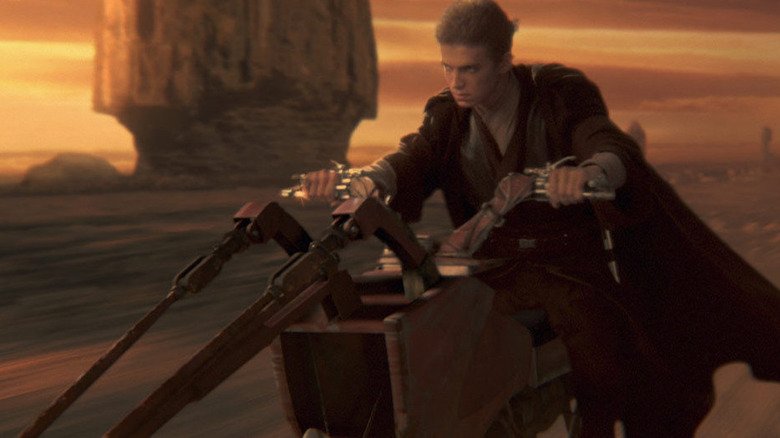
Anakin Skywalker. The name evokes the tragic echo of a fallen hero, the chilling whisper of a galactic tyrant, and ultimately, the hopeful redemption of a father. But before the iconic black armor, before the galaxy-spanning war, before the desperate plea of "Noooo!", there was a young man wrestling with destiny. Anakin Skywalker's character arc in Attack of the Clones isn't just a bridge between his innocent youth and his dark future; it's the crucible where his most profound vulnerabilities and dangerous impulses are forged, marking his first definitive steps toward the abyss.
This isn't a story of good versus evil in neat, predictable lines. It's the heartbreaking tale of a chosen one, gifted with unparalleled potential, who begins to unravel under the weight of his own powerful emotions, a dogmatic system, and a galaxy on the brink. Attack of the Clones is where Anakin, the burgeoning Jedi Knight, starts making the choices that will seal his fate, not with a bang, but with a series of quiet, desperate, and ultimately devastating moments.
At a Glance: Anakin's Pivotal Arc in Attack of the Clones
- Forbidden Love: Anakin's deep-seated feelings for Senator Padmé Amidala reignite, leading to a passionate, secret romance that directly defies Jedi doctrine.
- Visions and Desperation: Tormented by visions of his mother in pain, Anakin prioritizes personal attachment over Jedi duty, embarking on a rescue mission.
- The First Fall: Witnessing his mother's death at the hands of Tusken Raiders unleashes a torrent of grief and rage, leading to the massacre of the entire Tusken camp – including women and children. This is his definitive first plunge into the dark side.
- The Secret Vow: Haunted by his actions and desperate for connection, Anakin secretly marries Padmé, cementing an attachment that will eventually be exploited by darker forces.
- Seeds of Distrust: The film underscores Anakin's growing isolation and his tendency to conceal his true feelings and actions from his Jedi mentors, creating fertile ground for manipulation.
The Weight of Prophecy: A Chosen One Burdened by Fate
To truly grasp where Anakin stands in Attack of the Clones, we must first understand where he came from. He was the "Chosen One," a mythical figure prophesied to destroy the Sith and bring balance to the Force. Born to the enslaved Shmi Skywalker without a father, he was, in essence, a direct creation of the Force itself—a being of immense power and limitless potential. His childhood on Tatooine was marked by extraordinary mechanical skill and a deep, empathetic connection to others, often leading him to challenge authority and take risks.
His discovery by Jedi Master Qui-Gon Jinn, his dramatic podrace victory to win his freedom, and his wrenching separation from his mother were formative experiences. The Jedi Order, with its strictures against emotional attachments, already viewed him with caution, a sentiment only exacerbated by Qui-Gon's death and Obi-Wan Kenobi's reluctant mentorship. For a decade, Obi-Wan trained him, but the boy who was told "you are the Chosen One" carried an immense weight, a desperate need to prove himself, and a deep-seated fear of loss—all simmering beneath the surface of his Jedi training.
Forbidden Love Rekindled: The Perilous Path of Padmé
When Anakin is assigned to protect Senator Padmé Amidala from assassination attempts, the galaxy's fate isn't the only thing at stake; his heart is too. He hasn't seen Padmé since he was a boy, and the reunion ignites a powerful, undeniable connection. This is where the Jedi's strict dogma against attachments clashes head-on with Anakin's inherently passionate and deeply emotional nature.
Their time together, away from the watchful eyes of the Jedi Council, allows their feelings to blossom. Anakin, despite his earnest attempts to adhere to Jedi teachings, finds himself drawn irrevocably to Padmé. He struggles with his emotions, confessing his internal conflict to her: "I'm a Jedi. I know I'm better than this." Yet, he can't resist the allure of a connection that offers him comfort, understanding, and a sense of belonging that his Jedi life, with its emphasis on detachment, denies him. This secret romance becomes the emotional anchor for his arc, a hidden vulnerability that will ultimately be exploited.
Visions of Loss and the Urgent Call to Tatooine
Anakin's exceptional connection to the Force often manifests in prophetic dreams and visions. In Attack of the Clones, these visions become a terrifying reality check: he sees his mother, Shmi, suffering on Tatooine. This isn't just a fleeting nightmare; it's a relentless torment that shatters his focus and drives him to a singular, desperate goal: save his mother.
This urgency highlights one of Anakin's most defining and ultimately destructive traits: his fierce, possessive love for those close to him and his absolute terror of losing them. The Jedi preach letting go, accepting the cycle of life and death, but Anakin cannot. His mother, the only constant in his early life, represents a foundational attachment. His decision to abandon his protective duties to Padmé and race back to Tatooine, despite Obi-Wan's subtle warnings about letting his emotions guide him, showcases his nascent defiance of Jedi protocol and his dangerous willingness to prioritize personal attachments above all else. This moment of desperate hope, driven by love, sets the stage for his catastrophic first true fall.
The Unforgivable Act: A Mother's Death and a Raider's Massacre
The climax of Anakin's character arc in Attack of the Clones unfolds on the sands of Tatooine. He finds his mother, freed from slavery and married into the Lars family, but tragically captured and tortured by Tusken Raiders. He reaches her just in time for her to die in his arms, her last words echoing his name.
This scene is devastatingly pivotal. The raw, unfiltered grief and impotent rage that consume Anakin are palpable. He is the Chosen One, capable of incredible feats, yet he couldn't save the one person he loved most. The ensuing massacre of the entire Tusken Raider camp—men, women, and children—is not merely an act of revenge; it is his first conscious, deliberate embrace of the dark side. He yields completely to anger, hatred, and suffering, using his immense power not for justice, but for brutal, indiscriminate vengeance.
His subsequent confession to Padmé, "I killed them. I killed them all. They're dead, every single one of them. And not just the men, but the women and the children too," is chilling. It's a confession of deep shame, yet also a subtle justification born from his immense pain. Padmé, rather than recoiling entirely, offers him comfort, deepening their bond but inadvertently validating his struggle and the secrecy surrounding his dark deeds. This moment solidifies his resolve to prevent the death of loved ones at any cost, a path that will lead him straight into the arms of Darth Sidious. You can truly see the shift in Anakin in Attack of the Clones as he grapples with this horrifying personal trauma.
The Secret Vow: Marriage on Naboo
In the immediate aftermath of the Tusken massacre, Anakin is emotionally shattered and profoundly vulnerable. Padmé, instead of condemning him, offers solace and understanding, strengthening the very attachment the Jedi forbid. It’s a moment of profound psychological weight: Anakin has committed an unspeakable act, and the person he loves most has not abandoned him.
Before the galaxy erupts into the Clone Wars, Anakin and Padmé secretly marry on Naboo. This act is more than just a declaration of love; it is a profound rejection of his Jedi vows and a definitive step towards a dual life. He is now bound by an unbreakable, secret attachment, a ticking time bomb waiting to explode. This secret marriage creates an insurmountable barrier between Anakin and the Jedi Order. He can no longer be fully open with Obi-Wan or the Council about his deepest fears, desires, or the darkness he has allowed to fester within him. This isolation, this need for secrecy, will make him incredibly susceptible to the manipulations of Chancellor Palpatine.
During the subsequent Clone Wars, Anakin rises to the rank of Jedi General, becoming a renowned hero. He even loses a hand in battle, a symbolic foreshadowing of his future dismemberment and reconstruction. However, the emotional scars from Attack of the Clones run far deeper than any physical injury.
Seeds of Distrust: Eroding Faith in the Jedi
While the more dramatic erosion of Anakin's faith in the Jedi occurs later (with events like the Council faking Obi-Wan's death and the wrongful accusation of Ahsoka Tano), Attack of the Clones plants the crucial early seeds of this distrust. His need to hide his relationship with Padmé, and especially his horrific act on Tatooine, forces him to keep secrets from his mentors. This creates a psychological distance.
He begins to perceive the Jedi's rules as arbitrary, hindering his ability to truly help or protect those he cares about. He questions their wisdom, their compassion, and their understanding of deep emotions. This internal questioning, born from his personal tragedies and forbidden love, makes him ripe for external manipulation.
Palpatine's Shadow: The Unseen Architect of His Fall
Even in Attack of the Clones, Chancellor Palpatine is subtly working his insidious influence. Though his true identity as Darth Sidious remains hidden, Palpatine consistently provides Anakin with a sympathetic ear, validating his doubts about the Jedi, subtly encouraging his emotions, and positioning himself as a trusted mentor and father figure. He praises Anakin's abilities and uniqueness, contrasting it with the Jedi's conservative approach.
Anakin's emotional turmoil, his sense of being misunderstood by the Jedi, and his desperate need for someone to confide in, make him an easy target. Palpatine recognizes Anakin's fear of loss and his immense capacity for love and anger, knowing these are the very levers that can turn the Chosen One to the dark side. The events of Attack of the Clones — the forbidden love, the trauma of his mother's death, and the secrecy surrounding his darkest deeds — create the perfect psychological landscape for Palpatine's masterful manipulation to take root.
The Price of Passion: What Anakin Lost and Gained in Attack of the Clones
By the end of Attack of the Clones, Anakin Skywalker is irrevocably changed. He has crossed a moral threshold he can never uncross, a line that even the Jedi Council would deem unforgivable.
What he lost:
- Innocence and Naivete: The earnest, if impulsive, boy is gone, replaced by a brooding young man burdened by a dark secret.
- Trust in the Jedi Way: His obedience to Jedi doctrine is fractured, replaced by a growing resentment for its perceived limitations on his personal happiness and power.
- Inner Peace: The Tusken massacre leaves a profound scar on his soul, introducing guilt and self-loathing that he will carry for the rest of his life.
What he gained (or believed he gained): - Love and Connection: His marriage to Padmé offers him the emotional intimacy and belonging he craved, albeit secretly.
- A Dangerous Resolve: His experience on Tatooine hardens his resolve to prevent future losses, pushing him towards a path where he believes wielding ultimate power is the only way to protect those he loves.
- Vulnerability to the Dark Side: He has tasted the raw, unchecked power of the dark side and found it terrifyingly effective in moments of extreme emotional distress.
Attack of the Clones is not just a stepping stone; it's the point of no return for Anakin Skywalker. It’s the story of a hero beginning to fall, driven by the very emotions that make him human: love, fear, and grief.
The Path Chosen, The Destiny Unwritten: AOTC's Lasting Legacy
Anakin Skywalker's character arc in Attack of the Clones is a masterclass in tragic foreshadowing. It's here that the seeds of Darth Vader are undeniably sown, not through grand, evil declarations, but through deeply personal, agonizing choices fueled by love and loss. The film sets up the fundamental conflict that will define his life: his immense power versus his inability to control his emotions, his destiny as the Chosen One versus his vulnerability to manipulation.
The choices Anakin makes in this film — the secret love, the unforgivable act of vengeance, the embrace of secrecy — are the direct antecedents to his eventual fall. They illustrate that even the greatest heroes can be undone by their deepest fears and the most profound attachments. Attack of the Clones doesn't just show us a young Jedi; it shows us a fragile soul beginning to crack under the weight of an impossible destiny, paving the way for the tragic figure that would haunt the galaxy for decades to come. His arc reminds us that the line between light and shadow is often blurred, and sometimes, the most catastrophic falls begin with the most human of intentions.